I completely agree with you on the don't do it part.
The reason folks discuss this is because it turns out that some of the OEM charge cords (including the active parts) were built as 240V "capable" (with properly rated components, at least one company used a L2 ready board for some of GMs OEM 110V L1 charge cords) and with a little trickery in wiring connectors, they use them fine as L2 charge cords (albeit at slightly lower current because of the "pilot signal").
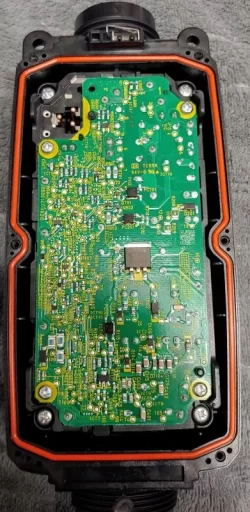
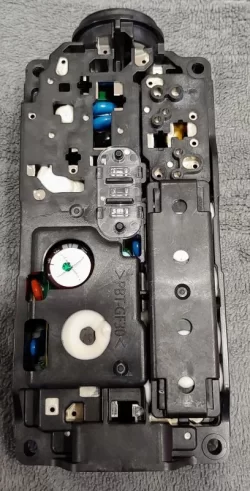
The active stuff (and there is lots as seen in the photo, all goes to those basic functions: relay control, the ground fault protection, and the pilot signal). Some of that connector rewiring would give a safety person heart burn (non-standard connections, non standard use of connector types), but clearly (for some manufacturer models, such as some or most Volts) it can be done "somewhat safely". I would not. (because of non-standard connector use, the lower current capability, and insurance worries if something did go wrong) But, by now hundreds have, with no problems. Instructions abound at forums like the Volt forum, and some folks have made a cottage industry of modding and/or supplying adapter parts and cords. Most of the basic hacking, even if not code compliant, has otherwise been "sort of okayed" by the EEs and Techs on the forums.
The pilot signal (one of the smaller pins in the SAE
J1772 connector to the car) just tells the charger (which is a module in the car, usually one of the substantial looking aluminum boxes) what current the charge cord (the
EVSE and it's supply wiring) is capable of supplying, so that the charger does not demand higher current than can be provided by the wiring to the charge cord apparatus and the charge cord EVSE itself. For example, if I use my old 20A clipper creek L2 240V EVSE, the Clarity cannot draw its maximum 32A. That's because the pilot signal from my 20A Clipper Creek tells the charger its (the 20A EVSE) 20A maximum available current.
It really is just the relay, the ground fault protection, and the pilot signal (which sets the charge current, when settable). The voltage is fixed, what you supply is what is the EVSE conveys to the car, minus any relatively small voltage drops from ohmic (resistive) loss in the cables (e.g. in the range of 208V to 240V for L2 charge cords). Or, as intended, usually about 110V to 125V.
The charger is in the car. The EVSE including its active electronics and cable, is just a "smart" charge cord.