PSA: Recall for HV Battery

  • Thread starter Thread starter inferno10
  • Start date Start date
  • Replies Replies 375
  • Views Views 47K
Another went up in the UK a few days ago. This is the 3rd YTD. Apparently it didn’t have the software update which honestly is just a bandaid solution. The car in photos display check HV Battery and drivetrain malfunction before going up


We have pretty much decided that we aren’t keeping our 2023 SE when the lease is up. Mini needs to launch a complete battery recall

View attachment 28859View attachment 28860
For an EV that's had a battery fire, it's remarkably intact. Usually it's hard to tell what it was.
 
That looks like it got t-boned and then the fire started, nothing to do with charging. The photo with the flames doesn't look any worse than a gasoline fire. Also curious to see the bonnet popped open, there's nothing under there except the motor, heat pump, and 12 V battery. Is that emergency response protocol?
 
That looks like it got t-boned and then the fire started, nothing to do with charging. The photo with the flames doesn't look any worse than a gasoline fire. Also curious to see the bonnet popped open, there's nothing under there except the motor, heat pump, and 12 V battery. Is that emergency response protocol?
When I had my F56 SE, I remember seeing an "emergency cut" wire under the bonnet on the driver's side, near the windshield. I assume that's some kind of safety disconnect or way to trigger the traction battery's primary fuse.
 
That looks like it got t-boned and then the fire started, nothing to do with charging. The photo with the flames doesn't look any worse than a gasoline fire. Also curious to see the bonnet popped open, there's nothing under there except the motor, heat pump, and 12 V battery. Is that emergency response protocol?
the mental gymnastics over a platform that has a serious fault is hilarious. The F56 SE needs a recall not a software update
 
When I had my F56 SE, I remember seeing an "emergency cut" wire under the bonnet on the driver's side, near the windshield. I assume that's some kind of safety disconnect or way to trigger the traction battery's primary fuse.
That's what I was going to mention.

As you may know, there's also a disconnect under the access panel for the right taillight. That one you can pull partway apart for, e.g., service then push back together to reconnect.

Initially counterintuitive to me is how small the wires are, but it makes sense when you realize that these disconnects apparently just isolate the battery controller, so that high current doesn't flow (unless there's an active short).
 
the mental gymnastics over a platform that has a serious fault is hilarious. The F56 SE needs a recall not a software update
For sake of argument, let's assume that this was indeed a spontaneous battery fire, and not the result of a collision.

Let's also assume that there were indeed two other such incidents in the UK earlier this year (although I don't know where you're getting that information).

AFAIK, the software update to enhance battery monitoring was the result of two fires.

So, that's five, out of a total production of over 140,000, or 0.004%. That's an annual risk of 0.00067%.

At what point would a recall to take additional steps be warranted?

That's not a rhetorical question, but also one that I'm not sure I know the answer to.

I suppose a couple of really big considerations would be:

1) are fires limited only to those couple/few hundred SEs with batteries that weren't sealed properly, and

2) did any fires occur in vehicles that received the software update, which failed to flag a developing problem? (If the owner ignored the warning, that's another story.).

If 1, then the failure rate is much higher, but it would seem that the cause has already been identified and the issue has already been successfully addressed (unless some resealed battery catches fire due to water ingress).

Same if not 2.

OTOH, If not 1 but if 2, then perhaps some additional actions are warranted (or not).

Point being, there's too much that we as consumers don't know to draw any valid conclusions even if humans were capable of accurately judging risk (which we aren't).

ETA: According to Google AI, high risk industrial plants target an annual risk of catastrophic equipment failure of, coincidentally, <0.004%. Thus, if there have actually been five fires and the issue hasn't already been successfully addressed (see above), then it would seem that the situation may be on the cusp of requiring further action. However, both of these conditionals would have to be true. Otherwise, this standard hasn't been exceeded.

 
Last edited:
Another went up in the UK a few days ago. This is the 3rd YTD. Apparently it didn’t have the software update which honestly is just a bandaid solution. The car in photos display check HV Battery and drivetrain malfunction before going up


We have pretty much decided that we aren’t keeping our 2023 SE when the lease is up. Mini needs to launch a complete battery recall

View attachment 28859View attachment 28860
This Ev looks to good for HV battery fire as tires are still inflated
 

Attachments

  • image.webp
    image.webp
    363.4 KB · Views: 4
For sake of argument, let's assume that this was indeed a spontaneous battery fire, and not the result of a collision.

Let's also assume that there were indeed two other such incidents in the UK earlier this year (although I don't know where you're getting that information).

AFAIK, the software update to enhance battery monitoring was the result of two fires.

So, that's five, out of a total production of over 140,000, or 0.004%.

At what point would a recall to take additional steps be warranted?

That's not a rhetorical question, but also one that I'm not sure I know the answer to.

I suppose a couple of really big considerations would be:

1) are fires limited only to those couple/few hundred SEs with batteries that weren't sealed properly, and

2) did any fires occur in vehicles that received the software update, which failed to flag a developing problem? (If the owner ignored the warning, that's another story.).

If 1, then the failure rate is much higher, but it would seem that the cause has already been identified and the issue has already been successfully addressed (unless some resealed battery catches fire due to water ingress).

Same if not 2.

OTOH, If not 1 but if 2, then perhaps some additional actions are warranted (or not).

Point being, there's too much that we as consumers don't know to draw any valid conclusions even if humans were capable of accurately judging risk (which we aren't).

ETA: According to Google AI, high risk industrial plants target an annual risk of catastrophic equipment failure of, coincidentally, <0.004%. Thus, if there have actually been five fires and the issue hasn't already been successfully addressed (see above), then it would seem that the situation may be on the cusp of requiring further action. However, both of these conditionals would have to be true. Otherwise, this standard hasn't been exceeded.
And if it caught on fire in your house? The fact there is a software hack indicates an issue. Frankly I never liked this approach as it’s a bandaid solution
 
And if it caught on fire in your house?
Having my house catch fire as a result of a lightening strike is 6-13 times more likely. (Yes, I looked it up.)
The fact there is a software hack indicates an issue. Frankly I never liked this approach as it’s a bandaid solution

How is the situation any different than if the BMS had always been doing what the update now does?

TLDR: With any battery, there is a non-zero risk of failure leading to combustion. The only question is whether sufficient effort has been put into mitigating that risk such that it is low enough, however the former is achieved and the latter defined.
 
Having my house catch fire as a result of a lightening strike is 6-13 times more likely. (Yes, I looked it up.)
This actually did happen to our house when I was a kid. After hitting the chimney, the electricity found a path to ground via the household wiring, overheating a junction box in the rafters. Part of the repairs included adding a lightening arrestor (a post-hoc "bandaid solution", according to MrSnub).

Anyway, the experience got me to wondering, which is greater: the odds of an EV battery failure starting a house fire, or the odds of charging an EV overwhelming the household wiring and starting a fire?

As it turns out, the latter is probably substantially higher, as 0.04% of homes experience a household fire due to electricity (e.g., (mis)use of extension cords, faulty outlets, etc.) every year, and plugging in an EV to charge can only increase that risk (even only pulling 10 amps as I do).
 
This actually did happen to our house when I was a kid. After hitting the chimney, the electricity found a path to ground via the household wiring, overheating a junction box in the rafters. Part of the repairs included adding a lightening arrestor (a post-hoc "bandaid solution", according to MrSnub).

Anyway, the experience got me to wondering, which is greater: the odds of an EV battery failure starting a house fire, or the odds of charging an EV overwhelming the household wiring and starting a fire?

As it turns out, the latter is probably substantially higher, as 0.04% of homes experience a household fire due to electricity (e.g., (mis)use of extension cords, faulty outlets, etc.) every year, and plugging in an EV to charge can only increase that risk (even only pulling 10 amps as I do).
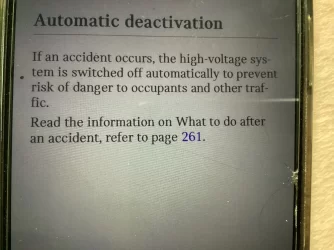
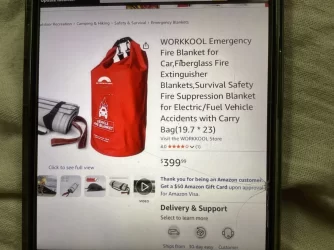
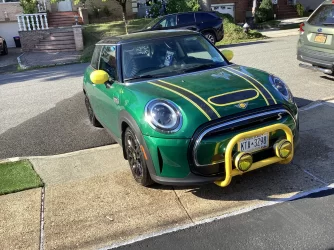
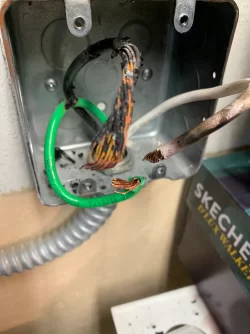
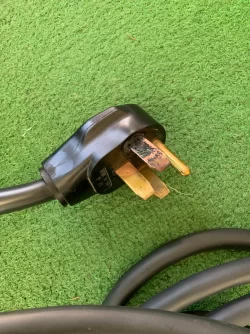
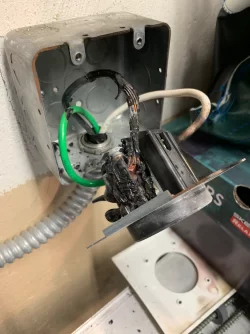
As I burn my charging Nema 14-50 outlet to crisp was a Home Depot $12 Leviton garbage but double braker 40 Amps act correctly over night disconnect a power now at the same outlet I have $ 100 Hubbell and smoke detector above a wire is 6 AWG and 2 nd smoke detector on opposite side away from charging outlet This is my for now protection as I park SE always in garage as update on HV battery was done by dealer .As so many people afraid about that thermal run-away in SE as statistics show is minimal. As my is in 70’ F garage I hope help me to charge a car in optimal temperature. AsSE is old technology they are there 1 Solid state batteries 2 Sodium-ion lithium iron phosphate and like company CATL have new safety like Quilin battery whitch can withstand bottom impacts short circuits and thermal run-away without catching fire or explosion .As still any thing can happen to SE I have a plan how to run away from my house safely. And in a future with my know how I may install fire blanket which automatically will be drop over a car but for now I’m fine as statistically is low accurance .We should not panic as I love that car.
 

Attachments

  • IMG_2822.webp
    IMG_2822.webp
    335.9 KB · Views: 2
  • IMG_2229.webp
    IMG_2229.webp
    1.1 MB · Views: 2
  • IMG_2896.webp
    IMG_2896.webp
    175.3 KB · Views: 1
  • IMG_2898.webp
    IMG_2898.webp
    679.7 KB · Views: 1
  • IMG_2894.webp
    IMG_2894.webp
    252.5 KB · Views: 0
Back
Top