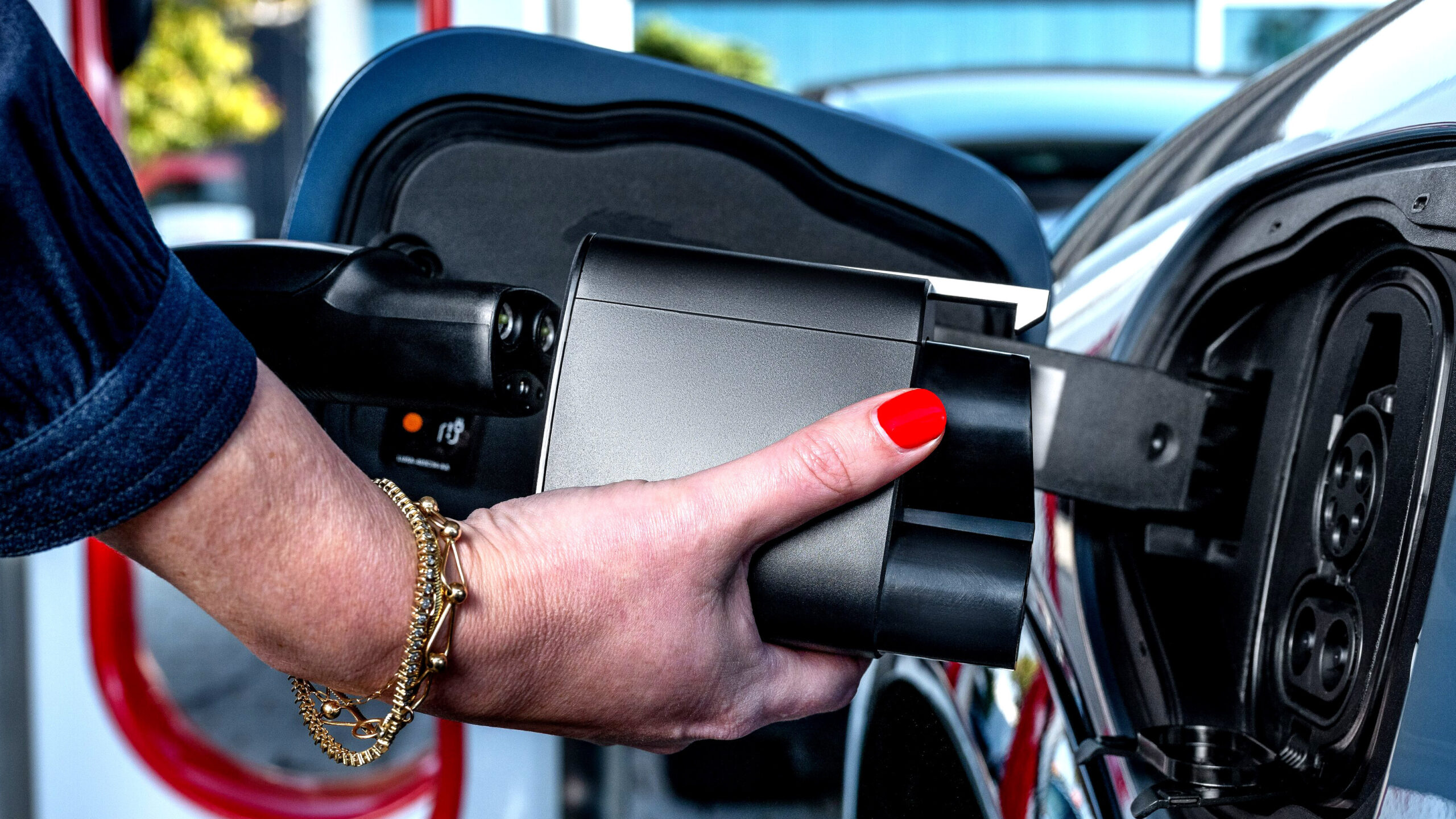
Most Plug-in hybrid owners don't plug in....

Maybe they are leaning hard on European info:
I would expect EU utilization of PHEVs in electric mode would be less for one big reason: Fewer people in the EU own their homes versus the US, so cheap home charging must be much less common there. PHEVs give you the choice of gas or electricity, and if the electricity price is high because of jacked up public charger rates, then they will fill up with gas more often. In 111k miles I've never charged at a public charger, at home electric prices are still about a third of gas and I am on electric 95% of the time. OTOH, so many people are totally clueless about how much different things cost maybe this is just a figment of my imagination?
 
I really like the part where they tell us that the cars use gas when in Electric Mode. At least they’re being open about how uninformed they are. Of course the elephant in the room, as I mentioned previously, is that by their own admission their previous assumptions were flawed and their expectations were unrealistic.

The Clarity gets about 40mpg on gas, which is more that just about anything comparable other than a Prius. Our Jeep gets 22-24mpg which is better that the V-6 or V-8 option. So even if driven on 100% gas, it’ll use less gas than many ICE only options. Let’s not forget that about 60% of US electricity is generated from burning fossil fuels, so it isn’t really that clean.

To be clear, I’m no more a fan of PHEV’s than I am of agencies, industry leaders or journalists who manipulate and distort information in an attempt to support their opinions.
IMG_4657.webp
IMG_4658.webp
IMG_4659.webp
 
I have a 2018 Clarity and know a few other people who own PHEVs. I don't know any PHEV owner who doesn't plug in, and the GM CEO's comment is very misleading. Driving daily around town, I'm currently on 452 miles without using any significant amount of gas. Charging is done using solar panels on my garage roof. Buying a PHEV was one of the best vehicle decisions I've made in my 65+ years. I understand the technology required by PHEVs is complex -- as one engineer friend of mine told me, "PHEVs are the most complex car that has ever been built, and ever WILL be built" -- because purely electric cars are so much simpler. The Big Brands don't make the same kind of money with PHEVs that they do with pickups, for example, so they don't want to make them. But honestly, homeowners would love them if they could all get 40-50 miles/per charge like the Clarity, because most people don't drive their cars over 45 miles/per day.
 
I wouldn't have thought that a lot of phevs ended up at apartment complexes or as rental vehicles. I guess rental companies may buy whatever looks like the most profitable vehicle for them. Here in Alabama, I know that two of the three apartment complexes my sons have lived in had chargers available, one had them as complimentary, one was pay at about 0.35/kWh.
I live in an apartment in NYC. My garage charges a fortune to charge, but my office has ample charging.

I used to charge every day at work, until they
  1. raised the price so it's ~2+ x higher per mile than gas, and
  2. added a bunch of time restrictions that forces me to go out 2 hours into my workday and move the car, potentially into a spot very far from my office

I'm currently all gas, except when I'm somewhere with reasonable charging.
 
Yeah, I'm not religious about any of this stuff. I've never bought into the arguments about using gas or electric. I think the fact that we have the choice is great. My Clarity is still getting about 40mpg when using gas. It's close to double the mileage of my last car (4cyl Subaru Outback), and of course I didn't have the option to not use gas before I got a Clarity. I'm also pragmatic about the cost to insure and maintain more than one vehicle. I mean it might be that owning a PHEV keeps one from having 2 cars (one electric and one gas for long trips). I'll still be driving a PHEV for the foreseeable future (and hopefully Clarity as long as possible. I like the car.)
 
If you don't need a second vehicle but have this idea of having a second car or truck just for the odd job or trip is really not economical. One can rent a vehicle for that purpose those days...instead of spending thousands of dollars for the ownership per year.
Also this idea that full EV are not road trippable is going away...just need a slightly better planning that ICE. One can have one's reason for wanting an EV or ICE. I am not arguing any...just that if one needs only one car one does not need a second car for odd once or twice in a year project.
I rented a truck from u-haul when i had to carry fence pickets.
I have a BEV that nominally does more than 300 miles on one charge and I road trip on it with 600 miles per day on average...and it has been pleasant and no issues of grinding my teeth.
If you are concerned with pollution etc HEV has been shown not to be much less polluting than full ICE. I went full BEV because that was my reason. PHEV might be helpful if most of your driving is on the battery range (It was not for me).
 
I own a 2019 NIRO PHEV that is now over seven years old and has around 77,000 miles on it.
I would estimate over 60,000 of those miles are all electric.
The idea that most don't plug in their PHEV is foolish.
Anyone who pays the extra amount to buy a PHEV and then the extra amount to register their PHEV that most states now charge EV's and PHEV's and then doesn't plug it in probably needs an appointment with a doctor to have their head examined.

We have a level 2 charger in the garage and the PHEV is always plugged in if it isn't being used. We live in a small city and it is not unusual to make many small trips each day sometimes putting close to 90 all electric miles on this vehicle in a single day.

If we want to take a long trip - big deal the car has a 12 gallon gas tank and gets 50 mpg with a 600 mile range if you use the gas engine - what is range anxiety!

The car will still get up to 25 - 30 miles on electric range when fully charged after close to 7 years.
 
With regard to the BEV vs. PHEV, I'll start by saying to each their own. But I'd like to add a couple of points about convenience of refueling, oft mentioned complexity (repairs) and cost difference.

I do a road trip each year from Oregon to Tucson and split the journey into two 10 hour days of driving. There's a lack of super-chargers on that route. Tesla's planner will send you to 'destination' level 2 chargers. Alternately you can radically increase miles driven and decrease pleasure by taking interstates and going through major cities. The rural western states are just a completely different thing than all of the east coast. Anyway, 10 hours a day is plenty and having quick stops for refuel make this road trip do-able.

In terms of complexity of PHEV which is often cited as an issue, I've seen no data indicating PHEV's require more repairs than BEV. Most of us plug in nightly and drive 80%+ electric, so our gas engine gets little use. We definitely don't need break pads (ever) because we use regen. There have been some Clarity specific issues which have been dealt with through warranty extension or recall. I'd count those for folks who do have to pay out of pocket, but that's not usually the case.

I know several PHEV owners, and none of them have any more repairs than a "normal" car. My Honda Clarity was the same price as a new Honda Civic when I bought it. I paid $24,700 (after rebates which I did receive). Many articles mention spending $50K or more for a new car. Who are these "normal" people that drop 50K on a car? No one in my extended family. We almost always buy used cars because that's what we can afford. Any BEV with similar cabin room to Clarity is likely to be expensive, and not less than $25K. And yes, 2026 is not 2018 (when I purchased) and the rebates are gone, but I don't magically have more money now. The point is the purchase price really matters.

One last edit, the range of Clarity happens to work well for me. I charge at home at about 12cents/Kwh and my full normal commute daily is 20 miles.
 
Last edited:
Anyone who pays the extra amount to buy a PHEV and then the extra amount to register their PHEV that most states now charge EV's and PHEV's and then doesn't plug it in probably needs an appointment with a doctor to have their head examined.

I’ve posted elsewhere that driving a PHEV on electric isn’t necessarily the most economical way to operate the vehicle. It was for us in Oregon where electricity was relatively inexpensive, gasoline was relatively expensive and the winters were mild. Those conditions are reversed in Michigan as well as much of the Midwest and northeast. At best the cost is about equal and for half the year it’s more costly to operate on electric.

We’re fortunate to be in a position where the cost difference would go unnoticed if I didn’t put myself through the mathematical gymnastics periodically. I probably should have my head examined but I have a hunch they won’t find anything. Thanks for the advice.
 
Many articles mention spending $50K or more for a new car. Who are these "normal" people that drop 50K on a car? No one in my extended family. We almost always buy used cars because that's what we can afford.

About 16 million people bought new cars in the US last year, presumably with an average cost near $50K. This happens year after year. We contributed 1 to that number and plan to contribute another this year once we get the Jeep 4xe back from the dealer. Still waiting for the battery to arrive, it’s been over 6 weeks and I’ve opened a case with Customer Care.
 
General Motors CEO Mary Barra, speaking this week at the Automotive Press Association conference in Detroit, touched on this reality when she discussed GM’s plans for electric and hybrid vehicles.

“What we also know today with plug-in hybrids is that most people don’t plug them in,” Barra said. “So that’s why we’re trying to be very thoughtful about what we do from a hybrid and a plug-in hybrid perspective.”

Where do they get this information and how do they represent it as such a fact? I've never known any phev owners that don't plug-in. Guess I don't get around enough. But I find this statement hard to believe at least in the United States. Of course, I've been limited to Volt and Clarity owners which had reasonably sized batteries, but those owners are pretty serious to plug in whenever it is an option. I guess maybe it is also true that gasoline and electricity breakeven prices are different than they are here. It is generally half as expensive to use electricity (off-peak residential price) as gasoline here with gasoline running $2.75 or so per gallon. We also still have a reasonable number of free level 2 chargers at workplaces and at retail shopping centers, hotels, and other commercial locations. Generally paid Level 2 public chargers are about the same or a little more expensive than gasoline, but I'll still use them if they are convenient. I guess I can see if those economics shift because gasoline is always less costly than electricity that I would change my behavior.

I can only cite my own experience with my 2018 Clarity PHEV, which is I plug it in any time the charge gets to 50% or less. I'd estimate that 90% of my mileage has been in EV mode. It's been great and I've saved money since the per mile cost for EV mode is still about $0.05 while gas mode is about $0.10 (WA state). (In recent years WA has started charging an electric vehicle fee to recoup lost fuel taxes, unfortunately, so the savings are effectively lost.) But mostly it's just convenient to skip the gas pump and plug in when I get home. And create less emissions charging from hydroelectric electrons. I'd suspect that many who bought phev's deliberately are similar. The great 47 miles of EV range was the kicker for me. It's still outstanding.
 
Where I live -
Electricity = $.10 per Kwh all inclusive
2019 Niro PHEV EX takes 8.9 Kwh to fully charge
full charge = 25 to 30 miles per gallon.

Therefore driving on electric
8.9 Kwh x $.10 = $.89 for full charge or 25 miles

Gas currently is $2.80 a gallon
2019 Niro PHEV EX = 50 mpg
Therefore, to dive 25 miles on gas = $1.40
 
I’ve posted elsewhere that driving a PHEV on electric isn’t necessarily the most economical way to operate the vehicle. It was for us in Oregon where electricity was relatively inexpensive, gasoline was relatively expensive and the winters were mild. Those conditions are reversed in Michigan as well as much of the Midwest and northeast. At best the cost is about equal and for half the year it’s more costly to operate on electric.

We’re fortunate to be in a position where the cost difference would go unnoticed if I didn’t put myself through the mathematical gymnastics periodically. I probably should have my head examined but I have a hunch they won’t find anything. Thanks for the advice.

You are 100% right that in some parts of our country it is more expensive to drive on electric rather than gas.

A good point is why would a rational person buy a PHEV or EV if it cost more to operate them than a gas vehicle in their particular area?
This is not even taking in to account the additional money most jurisdictions charge extra now to register a PHEV or EV.
Then add in a good dose of range anxiety - lack of public charging in many areas of our country - decreased range in cold weather and possible problems when charging in cold weather etc.

For us it is quieter to drive on all electric- cheaper - and more convenient filling up at home with our level 2 charger.

Since we have a PHEV and live in a small town almost all of our local driving is on electric power.
Because our PHEV also gets 50 mpg we can take long trips with no range anxiety - no worries about access to public charging or worries about states and public chargers that charge outrageous electric rates and no worries about cold weather effects on our vehicles range or performance.

For us a PHEV has been an energy and money saver.

Both the NIRO PHEV and the PRIUS PRIME PHEV will give their owner over 35 miles electric range and over 50 mpg when they switch over to gas.
Two of the most economical cars in the world and both under $35,000 for base models.
 
Back
Top