Which models do V2H / V2G?

  • Thread starter Thread starter Paul LVEVA
  • Start date Start date
  • Replies Replies 4
  • Views Views 23

Paul LVEVA

Now Hoosier EVA
I'm nearing the end of the lease on my Niro, and I would like to consider vehicles that I could support my home, or possibly sell back to the grid. The only ones I know are Tesla (Cybertruck and Model X, I think), Ford, and GM. All three are brands I will not consider.

At one time, Kia did a pilot program in Connecticut and California with the EV9 and a Wallbox Quasar, but I've not found any more info on it.

Does anyone have an updated list of EVs sold in the US with V2H and V2G capabilities???

Your lease situation probably won't let you wait for the less expensive BMW i3, but if a $66K-$76K SUV fits your plan, the BMW iX3 supports bidirectional Vehicle-to-Grid (V2G), Vehicle-to-Home (V2H), and Vehicle-to-Load (V2L).


looks like Kia is on the short list if the above brands are out.


looks like Kia is on the short list if the above brands are out.
Lucid is another:
 
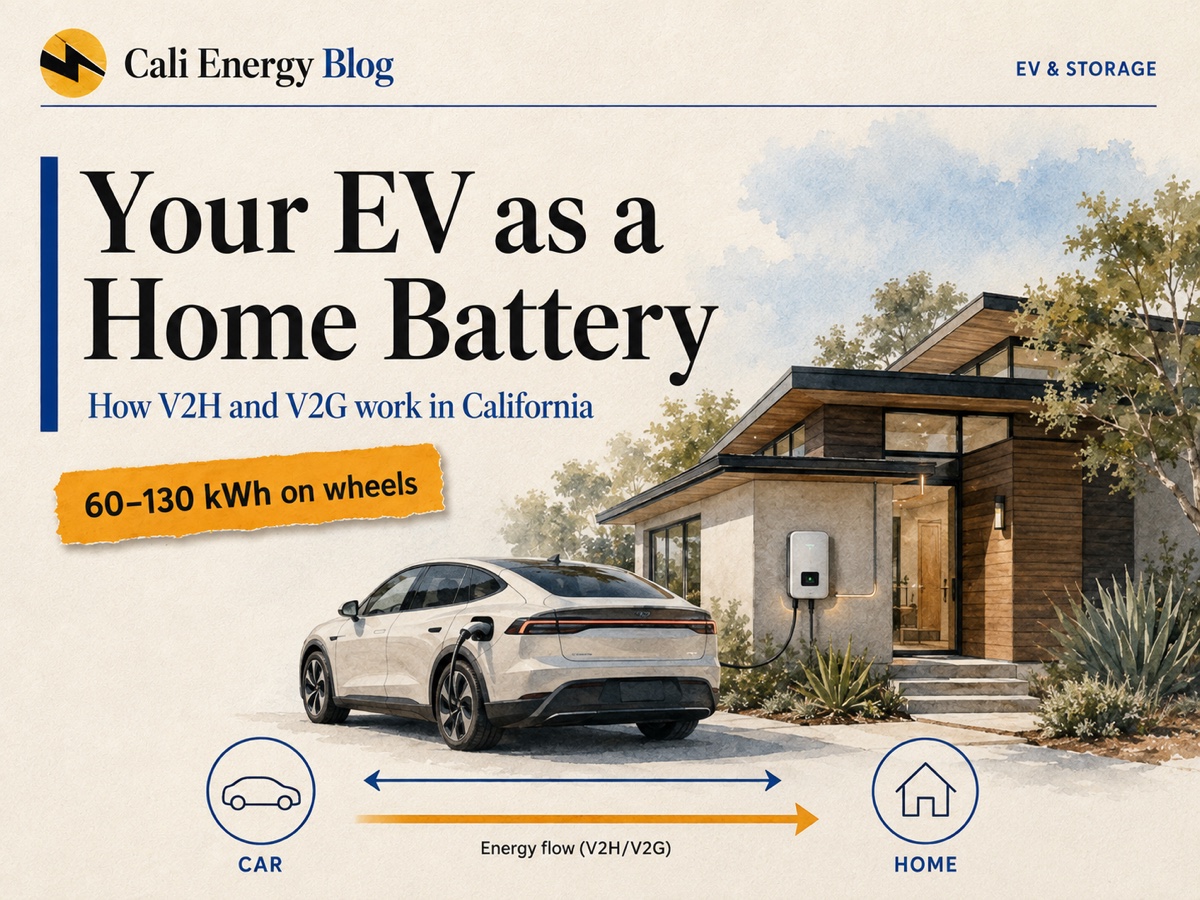
V2L, V2H and V2G get mixed up a lot. V2L is just outlets on the car for running appliances. V2H feeds the house, which takes a bidirectional charger, a transfer switch or gateway, and usually an electrician and a permit. V2G exports to the grid and needs utility approval and a tariff that allows it. A car with V2L isn't automatically V2H capable, so check what both the carmaker and the charger vendor support, and whether it affects the battery warranty. For backup time, divide usable kWh by your essential load: 60 kWh at 1.5 kW is about 40 hours, a bit less after conversion losses.
 
Back
Top