
Aleksandar Mitrovic
Active Member
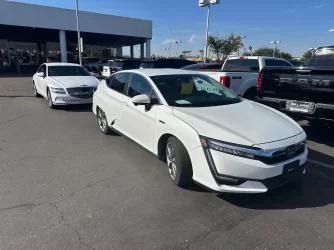
I purchased my 2019 Honda Clarity new in early 2021, and after the federal tax credit, it was an incredible value.
Over the next 5 years, I put 79,000 miles on it and, aside from tires, oil changes, and replacing the 12V battery, it needed nothing. The car was truly phenomenal.
I kept a detailed fuel log the entire time, and my average across those 79,000 miles was 94.1 MPG. Even more impressive, I noticed essentially no battery degradation—the car was still giving me about 47 miles of EV range at the end of my ownership.
When I traded it in for my next car, I had only lost about $5,200 in depreciation over those 5 years (when calculated including the $7,500 federal tax credit I received in 2021). Honestly, the Clarity was the best car I had owned up to that point.
What pushed me to upgrade was realizing that I enjoyed the Clarity most when it was running in EV mode. After 5 years with a PHEV, I knew I was ready to go fully electric.
Large-battery PHEVs like the Clarity have a real advantage: around town, they function like an EV, while still giving you the flexibility of gas for road trips. For people who don’t want to plan charging stops, that’s a huge benefit.
When the federal EV credit expired in September 2025, EV demand dropped sharply, and I took the opportunity to buy another niche/orphan car: the Genesis Electrified G80. Orphan models depreciate faster because their niche appeal limits demand. It does not mean they are bad cars; Clarity is a perfect example.
While I was very happy with the Clarity, the Genesis is a major upgrade in every way. The biggest improvements for me are the size (I’m no longer hitting my leg on the center console), better suspension, much better sound deadening, a significantly better sound system, far more power, a larger CarPlay screen with a physical control knob, better driver assist features, and cooled seats—which matter a lot in Arizona.
The Genesis is in a different class, so the comparison may not be entirely fair. But because of its own orphan-model status, it ended up being just as good of a deal as the Clarity was in 2021—except for a significantly better car.
Honestly, I don’t miss the Clarity at all. It served its purpose perfectly. Just like the Clarity was a huge upgrade over my 2014 Toyota Prius in 2021, the Genesis feels like the same kind of leap forward compared to the Clarity in 2025.
Over the next 5 years, I put 79,000 miles on it and, aside from tires, oil changes, and replacing the 12V battery, it needed nothing. The car was truly phenomenal.
I kept a detailed fuel log the entire time, and my average across those 79,000 miles was 94.1 MPG. Even more impressive, I noticed essentially no battery degradation—the car was still giving me about 47 miles of EV range at the end of my ownership.
When I traded it in for my next car, I had only lost about $5,200 in depreciation over those 5 years (when calculated including the $7,500 federal tax credit I received in 2021). Honestly, the Clarity was the best car I had owned up to that point.
What pushed me to upgrade was realizing that I enjoyed the Clarity most when it was running in EV mode. After 5 years with a PHEV, I knew I was ready to go fully electric.
Large-battery PHEVs like the Clarity have a real advantage: around town, they function like an EV, while still giving you the flexibility of gas for road trips. For people who don’t want to plan charging stops, that’s a huge benefit.
When the federal EV credit expired in September 2025, EV demand dropped sharply, and I took the opportunity to buy another niche/orphan car: the Genesis Electrified G80. Orphan models depreciate faster because their niche appeal limits demand. It does not mean they are bad cars; Clarity is a perfect example.
While I was very happy with the Clarity, the Genesis is a major upgrade in every way. The biggest improvements for me are the size (I’m no longer hitting my leg on the center console), better suspension, much better sound deadening, a significantly better sound system, far more power, a larger CarPlay screen with a physical control knob, better driver assist features, and cooled seats—which matter a lot in Arizona.
The Genesis is in a different class, so the comparison may not be entirely fair. But because of its own orphan-model status, it ended up being just as good of a deal as the Clarity was in 2021—except for a significantly better car.
Honestly, I don’t miss the Clarity at all. It served its purpose perfectly. Just like the Clarity was a huge upgrade over my 2014 Toyota Prius in 2021, the Genesis feels like the same kind of leap forward compared to the Clarity in 2025.
Attachments
Last edited:


