Access to Tesla supercharger network

  • Thread starter Thread starter eCork
  • Start date Start date
  • Replies Replies 155
  • Views Views 28K
Just completed a 6400 mile road trip from northern New England to New Mexico and southern Colorado and back in my 2024 SEL, averaging 4.2 miles/kwh. I used 27 different Tesla Superchargers, with the Hyundai adapter, plus a handful of Charge Point and Ionna chargers. My experience with the Tesla Superchargers was nearly flawless. I never had to wait for an open stall and experienced only one glitch, that simply involved moving stalls, the entire trip. In addition the Superchargers were usually the most convenient option, were always the least expensive, with my "non-Tesla" membership, and provided the fastest peak charging speeds, 92 kw, and overall charging time to 81%. The Superchargers that were open to the Kona were easy to find using the Tesla app. Road tripping in the U.S. in a Kona is much easier now than it was last year when I took a similar trip.
I also find the adapter is a lot easier to plug in using the sleek Telsa supply cords and NACS connector than the usual CCS Franken plug monstrosity and heavy cables encountered at other sites. I always seem to fumble a lot trying to get them to align the connector to the charge port especially if the lighting is poor.
 
worked with my 2020 Kona Electric Ultimate and A2Z adapter
A good point to check while using any adapter is certified (labeled):
ANSI/CAN/UL 2252, Standard for Adapters for Use with Electric Vehicle Couplers, was issued, dated March 19, 2025, as a new joint US/Canada Standard. (ie: ULc/us).
Video here released of a Tesla using an un-certified A2Z adapter:

In the report by Technical Safety B.C. :
" a short circuit appears to be between terminals and communication cable in the adapter"
Very detailed report, well worth the read.

"The owner of the Tesla vehicle had a third-party adaptor manufactured and sold by A2Z EV that allowed the use of a CCS1 DC fast charging connector to be used to charge the Tesla. The adaptor did not have an approved certification mark for Canada and was not an adapter approved for use by Tesla or most charging networks.

Safety Officer observations:
Significant scorching was observed at the charging port of the EV.• The terminal of the EV charger cable and the adaptor show signs of melting.• The circuit board in the EV charger is severely burned.• There were multiple burned components inside the EV charging station.• Photos of the adaptor show severe damage.• Security footage showed a large flash, knocking the EV owner to the ground.• There were no signs of damage to vehicle terminals.• The adaptor was not approved for use in Canada."

 
Last edited:
Ouch! I saw a teardown of one of those adapters a while ago. It seems that the high voltage DC pins have to be swapped left-to-right in any of these adapters. Very big conductors (for low resistance) crossing over each other in a small package...have to be good insulators. Also there were integrated thermal sensors to open up the control connection on over-temperature. Maybe I'm not eligible for an adapter for my 2025 Kona EV.
 
A good point to check while using any adapter is certified (labeled):
ANSI/CAN/UL 2252, Standard for Adapters for Use with Electric Vehicle Couplers, was issued, dated March 19, 2025, as a new joint US/Canada Standard. (ie: ULc/us).
Video here released of a Tesla using an un-certified A2Z adapter:

In the report by Technical Safety B.C. :
" a short circuit appears to be between terminals and communication cable in the adapter"
Very detailed report, well worth the read.

"The owner of the Tesla vehicle had a third-party adaptor manufactured and sold by A2Z EV that allowed the use of a CCS1 DC fast charging connector to be used to charge the Tesla. The adaptor did not have an approved certification mark for Canada and was not an adapter approved for use by Tesla or most charging networks.

Safety Officer observations:
Significant scorching was observed at the charging port of the EV.• The terminal of the EV charger cable and the adaptor show signs of melting.• The circuit board in the EV charger is severely burned.• There were multiple burned components inside the EV charging station.• Photos of the adaptor show severe damage.• Security footage showed a large flash, knocking the EV owner to the ground.• There were no signs of damage to vehicle terminals.• The adaptor was not approved for use in Canada."

Further investigative report and statement from A2Z suggest the charger itself initiated the arc flash event:

"Hi,

The first-generation CCS1-to-NACS adapter released in 2022 is safe. Following the incident, we conducted extensive retesting using both well-used and new units from the same production batch. All samples were subjected to dielectric withstand (hi-pot) testing up to 6 kV, and no insulation breakdown or abnormal behavior could be replicated. Tests were performed across multiple points, including DC+ to DC-, busbars to ground, and busbars to communication pins.

The fiberglass insulating plate separating the DC busbars is rated for up to 26.97 kV, providing a very high margin of safety.

Some of the preliminary comments appearing in the TSBC report reflect our initial draft observations, made at a time when there was significant external pressure suggesting the adapter was at fault. Once we insisted that the investigation expand to include the charging station hardware, grounding system, internal battery stacks, and data logs, the true cause was identified within the charging station itself.

It is important to note that no passive adapter is designed to carry continuous current on the protective-earth (ground) path. Under normal operating conditions, the charger’s internal protection systems should instantly detect and interrupt any current flow on that conductor.

IMD detection with this particular charger was falling outside (up to 20 seconds…) of the acceptable response range defined by safety standards, allowing the ground fault to persist instead of triggering an immediate shutdown.

Our report is based on the complete data provided to us by the charging station operator."
 
Were they able to salvage any of the unit that actually caught fire to see what might have failed? could have been a defective unit at assembly. It happens in .001% of the time even in rigorous mfg'ing environments
 
Were they able to salvage any of the unit that actually caught fire to see what might have failed? could have been a defective unit at assembly. It happens in .001% of the time even in rigorous mfg'ing environments
The Further investigative report I inserted with link (highlighted) includes this:
"Our own inspection found no manufacturing or insulation defect in the connected A2Z EV adapter. The damage observed was consistent with exposure to an external ground fault originating from the charging station. The adapter became a secondary path for current once the charger’s internal fault energized the ground circuit. "
which indicates to me that they did indeed inspect the affected unit.
 
electriceddy, your link to the Further Investigative Report links to A2Z's press release and doesn't contain the things you quoted. Could you look into this as I'd like to have all the backup available as I spar with some of my engineering friends about this incident. Or, perhaps I'm confused... Thanks.
 
electriceddy, your link to the Further Investigative Report links to A2Z's press release and doesn't contain the things you quoted. Could you look into this as I'd like to have all the backup available as I spar with some of my engineering friends about this incident. Or, perhaps I'm confused... Thanks.
Sorry, forgot to include that link
Thanks for reminding:oops:
 
Access permitted, however it sure would be nice if Tesla started installing drinking fountains at these locations
Tesla Horse.webp
:)
 
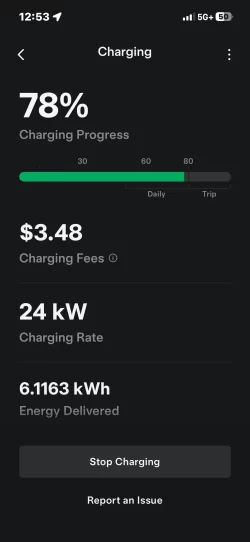
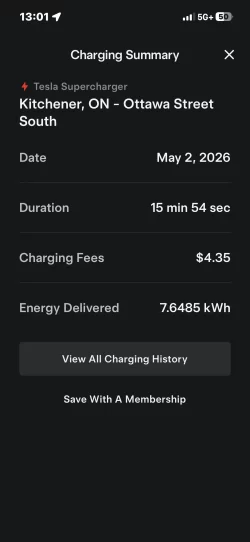
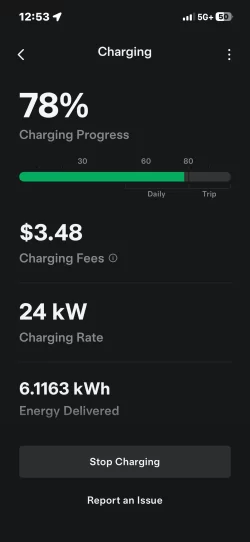
I purchased a NACS to CCA1 adapter from LJI on Amazon. Tested it today on my 20121 Kona EV. This was my the first time using a NACS connector and a Tesla Supercharger. The bottom line everything worked as expected. Here are my observations. Some are obvious, some are not.
1. When asking others how to set this up, the standard response is "use the Tesla app". There are several "Tesla" apps on the App store.
- Use Tesla Lifestyle app. You will need this to set up an account to allow the supercharger to work and Tesla to bill you.
- When setting up the account follow the instructions carefully. The account setup process will default to Tesla cars. You will have to describe your non-Tesla car, make, model, year. If you miss this section you will have to start setup all over.
2. Not all Superchargers are equipped to support 'foreign' - non-Tesla - cars.
3. Look at the supercharger map before taking off. I found the 'Supercharger for Tesla Station' app useful.
4. The ability of the supercharger can not override the fast charge speed limitation of your car.
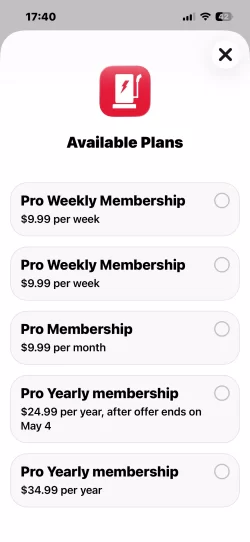
5. Charging is quite costly - see images below. After an initial 3 days of free access the monthly membership for non-Tesla car owners on image 3. Note the first year special. My special offer will end on May 4th. The end of my free 3 days intro. Yes, one can cancel the membership at any time before the charge for a new month kicks in.

This explains why one can see Teslas charging at non-Tesla DC chargers. So charge at home if you can!
 

Attachments

  • Supercharging in Progress.webp
    Supercharging in Progress.webp
    44.4 KB · Views: 3
  • Supercharging Summary.webp
    Supercharging Summary.webp
    52.3 KB · Views: 3
  • Tesla Supercharge Membership fees.webp
    Tesla Supercharge Membership fees.webp
    71.3 KB · Views: 3
I purchased a NACS to CCA1 adapter from LJI on Amazon. Tested it today on my 20121 Kona EV. This was my the first time using a NACS connector and a Tesla Supercharger. The bottom line everything worked as expected. Here are my observations. Some are obvious, some are not.
1. When asking others how to set this up, the standard response is "use the Tesla app". There are several "Tesla" apps on the App store.
- Use Tesla Lifestyle app. You will need this to set up an account to allow the supercharger to work and Tesla to bill you.
- When setting up the account follow the instructions carefully. The account setup process will default to Tesla cars. You will have to describe your non-Tesla car, make, model, year. If you miss this section you will have to start setup all over.
2. Not all Superchargers are equipped to support 'foreign' - non-Tesla - cars.
3. Look at the supercharger map before taking off. I found the 'Supercharger for Tesla Station' app useful.
4. The ability of the supercharger can not override the fast charge speed limitation of your car.
5. Charging is quite costly - see images below. After an initial 3 days of free access the monthly membership for non-Tesla car owners on image 3. Note the first year special. My special offer will end on May 4th. The end of my free 3 days intro. Yes, one can cancel the membership at any time before the charge for a new month kicks in.

This explains why one can see Teslas charging at non-Tesla DC chargers. So charge at home if you can!
Thanks for this aid memoir for setting this up.

One question, for clarification:

IMG_4677.webp


All things being equal and with no context, I would pay “Pro Yearly membership $24.99 per year, after offer ends on May 4”.

So what is the fine print that would steer one to pay $9.99/month ($119.88 a year), or “Pro Yearly membership $34.99 per year” versus the $24.99/year option?

Thanks. Cheers.
 
It also explains why a retired couple in a Tesla asked us at Manning Park when we would be ( (we had a Kona then) finished with a CCS charger . I said there were NACS chargers a 100 meters away. They said they were more expensive. Now we have a NACS vehicle we do shop for Tesla prices prices and choose our rare level 3 requirements that way. Different locations and times have different prices. We do prefer their app and stations over the BCH Heavy cable CCS stations. I do believe BCH & On the run are starting to put in some NACS stations but we haven’t checked them out yet. We do carry a CCS to NACS adapter but I doubt we will ever use it.
 
Back
Top